

Do not hire an AI consultant to add subscriptions; hire them to embed AI into the CRM and task board you already use.
Use these four operational realities to evaluate consultants, avoid white-label wrapper resellers, and protect your working capital.
A qualified small business AI consultant audits how work, leads, and customer conversations actually move through your company, removes redundant software subscriptions, and embeds artificial intelligence into your existing CRM and task workflows with a trained human reviewing every critical output. Unlike software resellers who pitch custom chatbots on day one, an operator-led consultant fixes your underlying process first, keeps advisory fees proportional to your budget, and leaves your staff with a documented system they can run without outside dependency.
Over the past two years, I have watched dozens of service business owners fall into the exact same trap. They hear that competitors are cutting overhead with artificial intelligence, so they hire a self-proclaimed AI consultant for small business who promises an “autonomous company” in thirty days. Three months and ten thousand dollars later, the owner is left with what I call a Frankenstein tech stack: a GoHighLevel or HubSpot setup nobody on the staff understands, forty broken Zapier automations firing into the void, three new monthly chatbot subscriptions that hallucinate prices to real leads, and a team still doing the exact same manual work in spreadsheets.
When things inevitably break, the vendor’s answer is always the same: you just need to buy this next AI tool, and pay us another monthly retainer to manage it.
I spent the last decade deep inside the agency and operations world, running three brands of my own and helping founders exit the daily operator grind. I know how those retainers are sold, why tool-first implementations fail, and how little it actually costs to run high-output AI workflows when your processes are clean. This guide breaks down what a small business AI consultant should deliver, how AI consulting differs from basic rule automation, realistic US pricing models (including our budget-proportional approach), six red flags that expose wrapper resellers, and a bounded 30-day scope you can use before signing any contract.
What Does a Small Business AI Consultant Actually Do?
A small business AI consultant evaluates where your company loses time or revenue across lead response, client onboarding, fulfillment, and reporting, then designs and implements AI-assisted workflows that run inside your existing software stack under human supervision. Their job is not to teach your staff generic prompt tricks or sell you proprietary software; their job is to turn your best human judgment into repeatable, lower-cost production systems.
According to the U.S. Chamber of Commerce Empowering Small Business report, 58 percent of U.S. small businesses reported using generative AI tools in 2025, more than doubling from 23 percent in 2023 (U.S. Chamber of Commerce, 2025). Yet adoption and financial return are two completely different things. Research from Boston Consulting Group reveals that 74 percent of companies struggle to achieve and scale tangible value from their AI investments, while a study by the RAND Corporation found that over 80 percent of AI projects fail, which is roughly twice the failure rate of traditional information technology projects (Boston Consulting Group, 2024; RAND Corporation, 2024). Both the BCG and RAND studies examined broader enterprise and mid-market initiatives rather than ten-person local service companies, so treat those percentages as directional industry context rather than a fixed rule for your shop. Even so, the root cause RAND identified in enterprise failures is the exact same mistake I see in small service businesses every week: owners and consultants misunderstand the operational problem and apply AI to a broken process.
How an AI Consultant Differs From a Business Process Automation Consultant
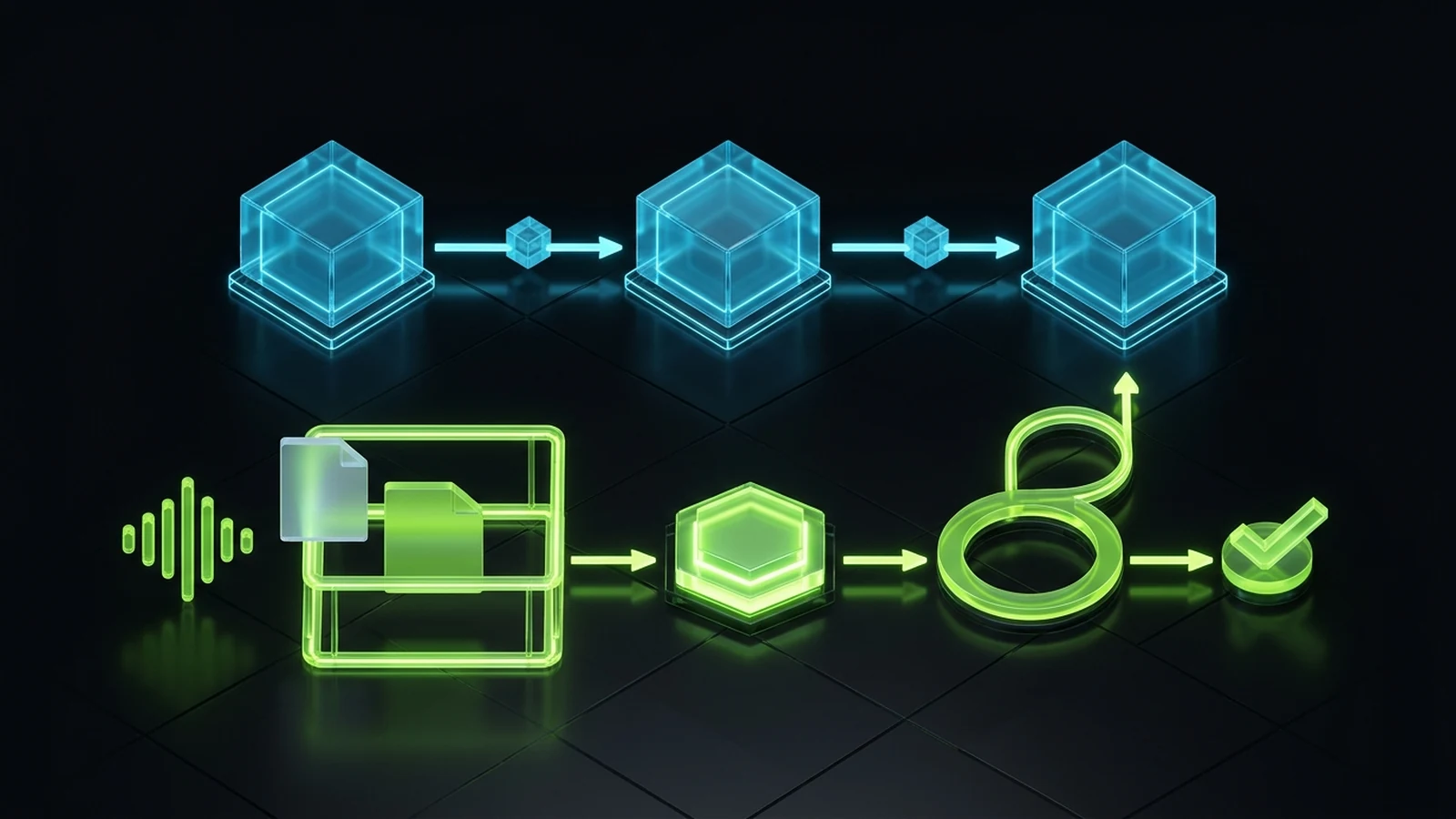
Business owners frequently ask me whether they should look for a small business AI consultant or a business process automation consultant. While one experienced operations architect often wears both hats for a company of ten to thirty employees, the technical work solves two distinct problems:
- Deterministic Rule Automation (Moving Structured Data): When a client signs a contract in PandaDoc, a rule-based workflow creates a folder in Google Drive, updates a stage in GoHighLevel, posts a notification in Slack, and generates a recurring task card in
iT-Kanban. There is zero guesswork, zero language generation, and zero need for an AI model. If the input is A, the output is always B. - Probabilistic AI Systems (Handling Unstructured Work Within Guardrails): When an inbound lead calls your clinic at 8:30 PM asking whether a specific treatment is covered and trying to book a Tuesday slot, or when a department lead records a fifteen-minute screen walkthrough that needs to be turned into a six-field Standard Operating Procedure, simple
if-this-then-thatrules fail. An AI consultant designs the context documents, prompt frameworks, tool integrations, and human escalation gates so language models can handle messy, unstructured voice or text without inventing facts or damaging your reputation.
| Operational Dimension | DIY ChatGPT / Claude Subscriptions | Business Process Automation Specialist | Small Business AI Consultant (Systems Architect) |
|---|---|---|---|
| Primary problem solved | Individual employees drafting faster emails, summaries, or ad copy | Eliminating manual copy-pasting between software apps (CRM, forms, billing) | Redesigning end-to-end workflows where AI handles unstructured tasks under human review |
| Core technical layer | Browser chat windows ($20/month per seat) | Zapier, Make, n8n, native CRM workflow triggers, webhooks | Existing CRM + custom context frameworks, voice/text agents, API credits, and task-board gates |
| Risk if poorly managed | Generic writing voice and staff pasting sensitive data into public chats | Silent webhook failures or duplicate CRM records firing into the void | Hallucinated customer answers, Frankenstein subscription bloat, and staff rework |
| Who owns quality control | Each individual user in their own browser tab | Automated error logs and the operations manager | Trained Department Champions reviewing AI outputs against a written Definition of Done |
| Best fit for a 10-person firm | Immediate first step before hiring outside help | When processes are already documented and repeatable by hand | When you have working processes and want to scale throughput or 24/7 response without adding headcount |
The Five Deliverables Every AI Consulting Engagement Should Produce
Whether you hire my team or another advisor for ai consulting for small business, you should never pay for vague “brainstorming sessions” or a fifty-page slide deck about the future of technology. A practical engagement produces five concrete operational assets:
- A Subscription and Workflow Audit: A line-by-line review of every software tool you currently pay for, which ones overlap, where leads or tasks are leaking, and which hyped subscriptions you can cancel immediately. (When my team at Integral Technologists audited our own client portfolios during our AI transition, one of the fastest wins we delivered was testing the hyped AI tools clients had impulse-bought, cancelling the useless ones, and redirecting that wasted monthly cash into actual SEO or paid acquisition.)
- Encoded Brand and Operational Frameworks: AI models fail when you let them improvise. As I learned the hard way across my own companies, letting an AI model guess the steps of an audit or invent a client response creates expensive rework. Your consultant must extract your real pricing rules, qualification criteria, voice constraints, and step-by-step SOPs into structured context files that govern every AI output.
- Enhancement of Your Existing Backbone (Not a Rip-and-Replace): If your business already runs on a functional CRM like GoHighLevel or HubSpot, your consultant should wire AI capabilities directly into that system rather than forcing your team to migrate to a brand-new platform just because AI is fashionable.
- Human-in-the-Loop Escalation and Backup Routing: Every AI workflow needs an explicit failure boundary. For an inbound AI voice receptionist, that means instant call transfer or missed-call escalation to a live human backup operator when a caller asks a complex question. For content or SEO production, that means routing drafts into a “Submitted for Review” column on your task board before anything goes live.
- Department Champion Training and Handover: Your consultant should run structured AI training for employees with one capable lead per department on how the prompts, rules, and exceptions work so your internal team owns the system the day the consulting engagement ends.
Why I Paused Hype for Six Months Before Offering AI Consulting to Clients
Before you trust anyone calling themselves an ai strategy consultant, ask them one uncomfortable question: how long did you run these exact AI systems inside your own operating business before you started charging clients to build them?
When generative AI models began accelerating rapidly across the market, I watched two types of panic happen at once. On one side, several US service business owners I knew immediately froze hiring or laid off capable technical staff because they believed a twenty-dollar chat subscription would magically run their websites, marketing, and customer support. On the other side, marketing agencies and freelance developers who had never managed a P&L overnight rebranded themselves as “AI Transformation Agencies” and started billing clients thousands of dollars to experiment on live customer accounts.
Even some of our own agency clients pushed us to rush out flashy AI features and burn through heavy API credit experiments without a clear business rationale. I refused. I was not willing to misrepresent what the technology could reliably do or use paying clients as guinea pigs.
Instead, my core team and I made a decision that hurt in the short term: we spent roughly six months heavily reinvesting our time and resources into building and stress-testing AI workflows internally, accepting a period of minimal earnings and even losing a few impatient accounts along the way. Before we ever offered an AI-supported workflow to a client, we proved it across three of our own operating brands (Integral Technologists, OmniFlow, and The Retired Consultant):
- We downsized overhead without using creepy surveillance: Prior to our operational transition, I managed our agencies from a three-floor office with roughly twenty to twenty-five employees. Even though revenue was coming in, I was trapped managing daily operations, client retention, budgets, and staffing friction. We closed the three-floor office and restructured around a tight eight-person core selected for curiosity, ethics, and willingness to adapt, supported by specialized remote leads. During that transition, several people suggested building AI screen-recording and break-monitoring tools to police remote staff. I explicitly rejected employee surveillance. The point of AI in a small business is to remove repetitive drudgery for loyal, accountable adults, not to turn your company into a digital prison.
- We learned that AI without human frameworks causes losses: Early in our internal testing, whenever we gave an AI model a broad goal (“audit this website” or “write this client update”) and let it improvise the steps, the output looked polished on the surface but failed in production. Real gains only arrived when we encoded our team’s decade of practical experience into strict multi-step frameworks (
iT-SEOandiT-Kanban), where scripts verify mechanical rules and human specialists own final judgment. - We kept our own core AI software bill under $100 a month: One of the biggest myths in small business ai consulting is that you need two thousand dollars a month in enterprise software licenses to run serious automation. Across my three businesses today, our core team runs daily operations on three basic twenty-dollar-a-month AI subscriptions (ChatGPT Plus and Claude Pro) plus targeted pay-as-you-go API credits like DataForSEO, keeping our internal core AI tool spend under roughly one hundred dollars a month. (Client-specific voice minutes, CRM seats, or dedicated staff are separate, of course, and depend on call and task volume.)
Because we paid that six-month tuition on our own dime first, I now spend most of my working hours out of the daily operator seat, sending high-level instructions from my phone while our Department Champions and task systems run day-to-day execution. When a founder hires me today, they are not paying me to learn on their company.
Realistic Small Business AI Consulting Costs and Budget-Proportional Design
In the United States, hiring a small business AI consultant typically costs between $150 and $350 per hour for independent advisory, $2,000 to $7,500 for a bounded 30-day audit and single-workflow implementation, or $3,000 to $10,000+ per month for traditional agency retainers (Wilco Web Services, 2026; DataForSEO SERP benchmark, 2026). However, paying a flat $5,000 monthly consulting fee when your total operational budget is $2,500 is financial suicide. A good advisor uses budget-proportional solution design: keeping the strategy fee small so seventy-five to eighty percent of your budget funds the actual workflows, tools, and human operators that produce revenue.
Let’s look honestly at why traditional ai consultant cost structures break down for a ten-person plumbing company, medical spa, law practice, or digital agency. In an illustrative agency retainer model, if a firm charges you a four-thousand-dollar monthly “AI Strategy Retainer” before a single phone call is answered or a single task is automated, they have eaten your entire working capital. You are paying for their account managers and slide decks while nothing remains to fund the CRM configuration, the API usage, or the human backup operator who actually closes the lead.

How My Budget-Proportional Advisory Model Works in Practice
When founders come to me through The Retired Consultant, Integral Technologists, or OmniFlow, I refuse to sell a one-size-fits-all corporate retainer. Instead, we structure engagements around three transparent rules:
- The Initial Discovery Conversation Is Always Free: Whether you reach out through my contact page or one of our operating brands, our first diagnostic conversation costs nothing. We look at your current tools, your team bottlenecks, and whether you even need an AI consultant right now. If your real problem is that your team does not follow basic checklists, I will tell you to fix your business process documentation and employee accountability before spending a dollar on AI.
- Ongoing Personal Advisory Is Capped Near $499: For owners who want direct calendar access to me for ongoing architectural guidance, vendor audits, and operational problem-solving (with agreed meeting frequency and clear scope boundaries), my personal advisory fee is typically $499. I intentionally keep my own consultation fee under five hundred dollars so I never become another bloated line item on your P&L.
- The Rest of Your Budget Goes Into Real Execution Assets: Once we agree on the blueprint, we allocate whatever budget you actually have toward the people, software, and workflows that move the needle.
Illustrative Budget Allocation Examples Across Three Small Business Tiers
To show you how budget-proportional design differs from standard agency retainers, here is an illustrative operational model based on how we structure solutions for different budget levels (all figures below are illustrative examples, exclude paid advertising media spend, and do not guarantee specific financial returns):
| Monthly Owner Budget (Illustrative) | Traditional “AI Agency” Approach (Why It Fails) | Budget-Proportional Operator Approach (How We Allocate It) | Realistic Operational Outcome |
|---|---|---|---|
| $250 to $500 / month (Solo founder or 3-person shop) | Sold a $497/month white-labeled “AI wrapper” software with zero setup help or human backup | Keep existing tools; $40/mo for ChatGPT Plus + Claude Pro; remaining budget funds a targeted DataForSEO/API credit pool and one documented SOP workflow | Owner and one lead cut 5 to 8 hours/week of manual drafting and admin without adding software bloat |
| $1,500 to $2,000 / month (Growing 8-to-15-person service business) | Locked into a $2,000/month flat SEO or “AI chatbot” retainer where the agency sends automated PDF reports | Under $500 to advisory/architecture; ~$99/mo consolidated CRM (OmniFlow/GHL); remaining $1,000 to $1,400 funds dedicated remote specialist labor (e.g., inbound human+AI call coverage, SEO/content execution, and task-board oversight) |
Resilient 24/7 inbound lead capture with human backup, steady technical SEO + content shipping, and accountable daily task execution |
| $3,500 to $5,000 / month (Established multi-location clinic, firm, or agency) | Charged $5,000/month just to “manage” a Frankenstein stack of 12 disconnected SaaS tools and broken Zapier zaps | Consolidate >$1,200/mo of redundant SaaS into one backbone; fund a cross-trained Department Champion pod (CRM/ads lead, developer/designer, inbound specialist) plus custom AI audit/publishing pipelines | Full-stack operational engine with documented backup coverage, removing the founder from daily fulfillment management |
Note on remote staffing figures: In my operating experience with Integral Technologists, indicative remote full-time specialists (working eight hours a day for a month from lower-cost global markets) can start around US$300 to $500 per person for content, design, animation, or junior development roles, and roughly US$500 to $800+ for experienced English-speaking inbound receptionists or sales coordinators, while senior specialists cost more. Those figures are founder-reported illustrative ranges from our own operations, not a universal market guarantee, and depend on exact role complexity, hours, and jurisdiction. For medical spas or healthcare clinics, an inbound human+AI receptionist handles appointment scheduling and general service questions only, never clinical diagnosis or medical advice.
Six Red Flags That Expose an AI Wrapper Reseller Before You Sign
The fastest way to lose money when you hire an ai consultant for small business is to confuse a software reseller with an operations architect. Across the United States right now, thousands of solo marketers have bought a $297 white-label software account, slapped their own logo on a generic chat widget, and started cold-emailing business owners as “AI Consultants.”
Before you sign any agreement or hand over your CRM logins, run the candidate through these six operational red flags:
1. They Pitch a Tool Before Auditing Your Handoffs and SOPs
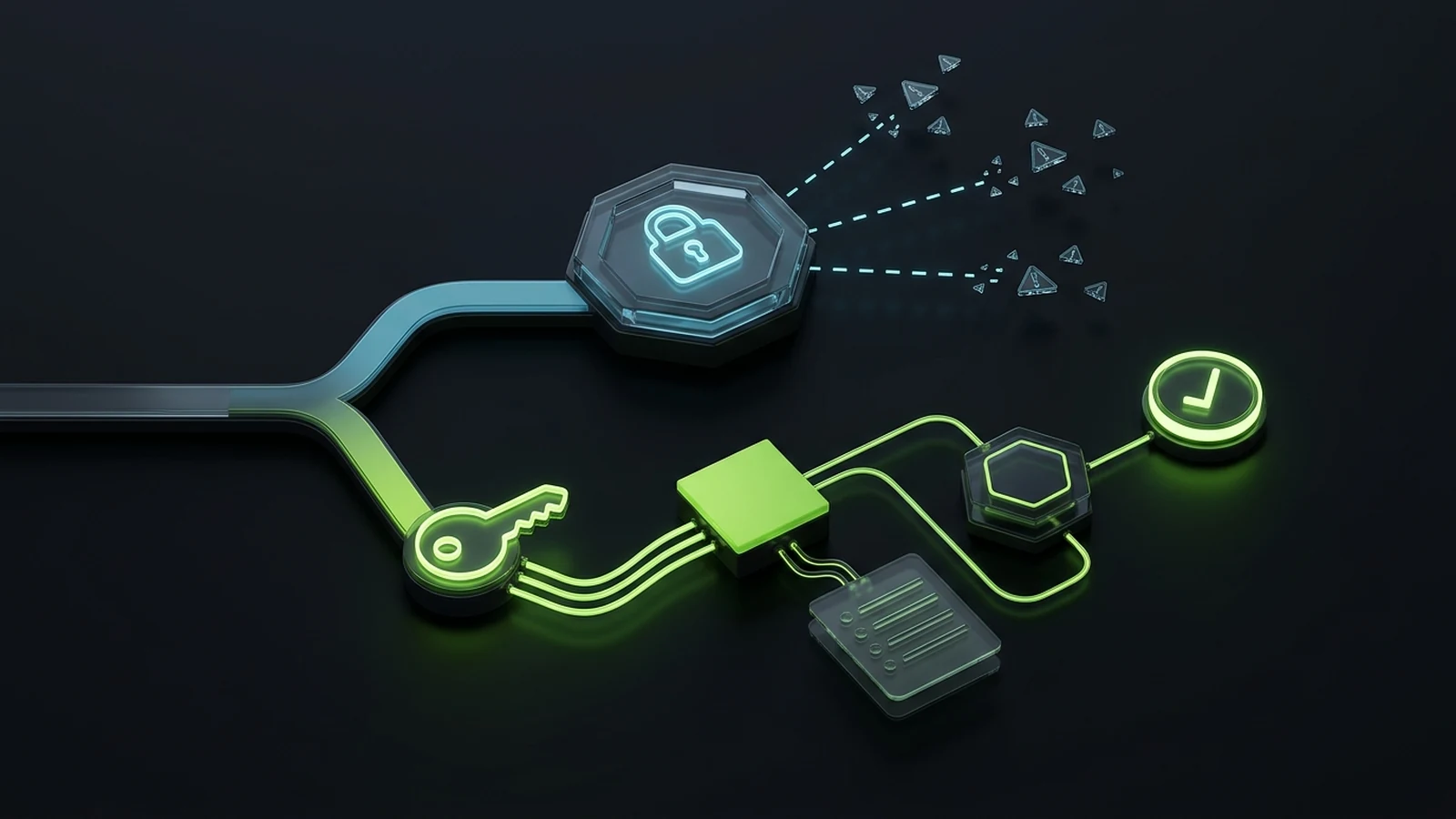
If a consultant spends the first twenty minutes of a discovery call showing you a flashy demo of their “proprietary AI agent” before asking how your leads currently arrive, who answers the phone, how quotes are approved, and where tasks get dropped, end the call. You cannot automate a process you do not understand. Automation repeats whatever you feed it, including your confusion.
2. They Want to Rip Out Your Working CRM on Day One
Last year, several clients who already had working GoHighLevel automations came to us wanting to throw away their entire CRM and rebuild everything from scratch around Claude or GPT agents because they saw a viral video. We talked them out of it. If your existing CRM already holds your contact history, pipelines, and phone numbers, throwing it away creates months of migration chaos. A real consultant enhances your existing CRM backbone with AI rather than forcing a rip-and-replace. (See my detailed GoHighLevel vs HubSpot comparison for how we evaluate CRM backbones without vendor hype.)
3. They Promise “100 Percent Autonomous, Zero-Human” Operations
Anyone who tells you that an AI agent will run your customer service, sales booking, or SEO publishing with zero human supervision is either lying or has never had to apologize to an angry high-ticket client. Even in our own resilient inbound call architecture, where GoHighLevel and AI voice models handle incoming ad-driven calls and book appointments at a very high reliability rate (our internal founder-reported tracking shows missed or poor-quality call outcomes combined below one percent, though errors have happened and we never claim a system “never misses a call”), human employees remain the mandatory backup and escalation layer. AI handles speed and volume; humans own exceptions and relationships.
4. You Do Not Own the Prompts, Accounts, or Workflows If You Leave
Ask the consultant directly: “If we end our agreement after ninety days, what stops working the next morning?” Wrapper resellers host the workflows inside their own master agency account and refuse to share the system prompts or webhook logic, turning their service into a hostage situation. When we build a system, the documentation, the prompt frameworks, and the workflow maps belong to the business owner.
5. They Recommend Employee Surveillance Instead of Task Accountability
Some consulting shops pitch AI “productivity trackers” that take random webcam photos, log keystrokes, or monitor five-minute bathroom breaks. As I noted earlier, I rejected that approach completely during our own six-month transformation. Surveillance drives away your best thinkers and rewards people who know how to fake mouse movement. True productivity comes from clear task scopes, deadlines, and objective Definitions of Done inside a transparent task board like iT-Kanban.
6. They Pass Off Branded Search Clicks or Generic Blog Slop as “AI SEO”
If your consultant includes content or search visibility in their scope, check whether they are simply generating fifty unedited articles a week that sound like a chatbot or taking credit for people searching your company’s own name on Google Business Profile. Meaningful AI-supported SEO requires live keyword and SERP data, strict mechanical quality gates, and authentic founder experience encoded into every section. (If you want to inspect what your current marketing vendor is actually doing, walk through our digital marketing agency audit guide.)
Four High-ROI Workflows a Small Business AI Consultant Should Build First
Instead of trying to “AI-enable” your entire company at once, a disciplined small business ai consultant starts with one of four high-return operational bottlenecks where the workflow is already repeatable by hand and the payback is measurable within thirty days.
Workflow 1: AI-First Inbound Call Handling and Lead Booking With Human Backup
For local service businesses, medical spas, dental clinics, and home-service contractors, the single biggest revenue leak is the phone call or web inquiry that goes to voicemail while your front desk is busy or after 5:00 PM. (We broke down the full unit economics of this in our guide to AI receptionists for small businesses, our blueprint for a 5-minute lead follow-up system, and our analysis of service business revenue leaks.)
In our own production architecture at Integral Technologists, we do not replace the client’s CRM or fire their receptionist. Instead, we wire an AI voice and SMS layer directly into their GoHighLevel pipeline:
- Step 1 (Immediate Answer): When a prospect clicks a Meta or Google ad and calls, or submits a form, the AI receptionist answers within seconds, answers common pre-approved questions (hours, parking, base pricing ranges, preparation instructions), and books the appointment directly onto the live calendar.
- Step 2 (Human Escalation Gate): If the caller asks a nuanced question outside the approved knowledge base, sounds frustrated, or requests a human, the system transfers the call or triggers an instant priority alert to a trained human backup operator.
- Step 3 (Contingency and Backup Coverage): Having lost client trust earlier in my career when a frontline employee was unexpectedly absent during critical call hours without notifying the team, we now enforce cross-trained backup coverage and
iT-Kanbanescalation alerts so a single absence never leaves a client’s phone line unmonitored.
Workflow 2: Consolidating a “Frankenstein Tech Stack” Into One Operating Backbone
According to our internal client audit report across service firms, many established small businesses are paying $1,200 to $2,500 every month across ten disconnected subscriptions: one tool for email newsletters, another for SMS reminders, a third for calendar booking, a fourth for reputation management, a fifth for social scheduling, and a pile of Zapier tasks holding them together with digital duct tape (Integral Technologists, 2026; for our step-by-step framework to eliminate duplicate tools, read our small business tech stack audit guide).
In a public first-party case study published on the Integral Technologists blog (A Younger You Wellness & MedSpa 90-Day Case Study), our team documented how consolidating over $1,200 per month of fragmented software tools into a unified $99 per month OmniFlow CRM and automation setup eliminated subscription bloat while pairing with structured SEO execution (which moved the clinic to 82 ranking search queries, roughly 20 at position 1, and improved average Search Console position from 19.1 to 13.7 over 90 days; note that these figures come from our published first-party case study rather than an independent third-party audit, and individual client results always vary based on market competition and execution). For another public brand on our roster, TOCC Aesthetics, connecting brand positioning, website architecture, CRM pipelines, and Meta Ads into a single documented workflow removed the manual friction between ad clicks and booked consultations.
Workflow 3: Turning Screen Recordings Into Living 6-Field Task-Board SOPs
When an owner tells me they cannot step away from their business for a three-day weekend, the culprit is almost never a lack of AI software; it is the fact that critical operational steps only live inside the founder’s head.
Rather than locking the founder in a room for a month to type out a giant company manual, an AI consultant implements the Department Champion Cascade:
- We select one capable, motivated person per department (for example, on our own team, Talha, whom US clients know as Jason, leads our GoHighLevel and paid ads workflows after I trained him personally).
- Whenever a working outcome is achieved, the champion records a raw ten-minute screen walkthrough while performing the real task.
- We run the transcript through a custom Claude Pro Project or ChatGPT Plus workspace to extract a concise, six-field SOP checklist (Trigger, Inputs, 5 to 9 Numbered Steps, Top 3 Failure Traps, Definition of Done, and Backup Role) and embed it directly inside the recurring task template on
iT-Kanban.
Workflow 4: Hybrid Human + AI Content, SEO, and Social Production Pipelines
Most small business owners either pay an agency thousands of dollars a month for two short blog posts or try to generate content with one-line prompts that produce unreadable robotic fluff.
When my team spent last year researching SEO alongside our specialists, we broke the workflow into four layers (iT-SEO):
- Live Data Layer: Automated pulls from Google Search Console and DataForSEO verify real US search volume, referring domain counts, and buyer intent before a single outline is approved.
- Founder Experience Layer (
iT-Brain): Instead of letting AI invent fake stories, the system queries a curated repository of real founder interviews, operational checkpoints, and verified case studies. - Mechanical Verification Layer: A deterministic Python script (
check_deliverable.py) scans every draft for banned AI words, stylistic dashes, title length, meta description limits, valid JSON-LD schema, and complete image briefs. - Human Specialist Layer: Our developers (
Kabir), publishers, and backlink specialists review the output, verify 390px mobile rendering, and handle genuine editorial outreach throughiT-Kanban. On our own hybrid demonstration property,myomniflow.com, as well as on this site, this human-plus-AI pipeline cut work that previously took six months down to roughly three months (founder-reported internal benchmark).
A Safe 30-Day Process-First Scope for Your First AI Consulting Project
Never sign a six-month or twelve-month retainer with a small business ai consultant on day one. Whether you work with us or an independent specialist in your city, insist on a bounded 30-Day Process-First Pilot tied to one clear operational bottleneck and one verifiable Deliverable of Done.

Week 1: The Frankenstein Stack Audit and Bottleneck Selection
- Goal: Stop current money leaks and pick the single highest-return workflow.
- Actions: Export your last ninety days of SaaS credit card charges and map how leads and client jobs actually move from first phone call to final invoice. Cancel unused or duplicate AI subscriptions immediately. Pick one bottleneck to solve in the next twenty-one days (for example: missed after-hours inbound calls, slow client onboarding, or undocumented fulfillment tasks).
- Deliverable: A one-page Stack & Bottleneck Audit naming the exact subscriptions cut, the single workflow selected, and the baseline metric (such as current missed-call rate or hours spent per week).
Week 2: Manual Outcome Verification and Guardrail Documentation
- Goal: Prove the process works by hand and write the rules the AI must obey.
- Actions: Walk through the chosen workflow manually three times to confirm every edge case. Write down the approved pricing boundaries, qualification questions, forbidden topics, and escalation triggers. Select the internal Department Champion who will oversee this workflow once built.
- Deliverable: A signed-off 6-Field SOP Card and AI Context Guardrail document stored inside your task board.
Week 3: Integration Inside Your Existing CRM + Human Backup Wiring
- Goal: Build the AI layer inside the tools your team already opens every morning.
- Actions: Configure the AI voice agent, SMS responder, or task-automation pipeline inside your existing CRM (such as GoHighLevel) or task board (
iT-Kanban). Wire the human backup notification path so any low-confidence interaction, complex client request, or overdue task immediately alerts the Department Champion and a designated backup person. - Deliverable: A live staging workflow tested against twenty real historical customer questions or edge-case scenarios, with zero hallucinated prices or dead-end loops.
Week 4: Live Traffic Launch, Champion Training, and 30-Day Scorecard
- Goal: Hand over ownership to your team and verify the result against Week 1 baselines.
- Actions: Turn the workflow on for live production traffic while the consultant and your Department Champion review every log daily for the first five business days. Record a fifteen-minute troubleshooting walkthrough so your team knows how to update prompts or routing rules themselves.
- Deliverable: A running production system, a trained internal champion, full admin ownership of all prompts and logins, and a 30-day before-and-after scorecard. Only after this pilot succeeds should you discuss a second workflow or ongoing advisory.
Ten Questions to Ask Before You Hire an AI Consultant for Small Business
Print or copy this checklist before your next vendor interview. The difference between an experienced operator and a hype reseller will show up in the first three answers:
- “Which AI workflows do you run inside your own company every day, and what is your own monthly AI software bill?” (Look for someone running lean, battle-tested workflows, not someone who only builds theoretical demos.)
- “Can you show me an example where you told a client NOT to use AI and fixed their manual process or SOP first?” (If they think every business problem requires an LLM, they will overcomplicate your operations.)
- “Will we build inside our existing CRM and task board, or are you going to pitch us a brand-new software platform?” (Insist on enhancing your current backbone unless your existing tool is genuinely broken.)
- “What happens when the AI encounters an angry customer, an unusual pricing request, or an edge case?” (Require a concrete human-in-the-loop escalation path and backup coverage plan.)
- “Who owns the system prompts, API keys, webhook accounts, and documentation if we stop working together?” (The answer must be completely your business, stored in accounts you control.)
- “How do you prevent the AI from inventing prices, medical/legal advice, or unapproved promises?” (Look for strict context documents, deterministic scripts, and human approval gates.)
- “How much of our monthly budget goes to your consulting fee versus the actual tools, workflows, and operators doing the work?” (Favour budget-proportional advisors over top-heavy agency retainers.)
- “Who on my current staff will you train as the Department Champion so we are not permanently dependent on you?” (Good consultants build internal capability rather than hoarding secrets.)
- “Can we start with a bounded 30-day single-workflow pilot before discussing any ongoing retainer?” (Never sign a twelve-month lock-in before seeing one working production system.)
- “How will we measure whether this workflow actually saved human hours or captured revenue after 28 days?” (Demand a clear before-and-after operational metric, with honest acknowledgement that results vary.)
When You Should NOT Hire an AI Consultant Yet (And What to Do Instead)
I turn away small business owners from paid AI builds whenever their company fails three basic readiness checks:
- Your core service offer changes every week: If you do not yet have a repeatable service package, pricing structure, or target customer, AI will only help you generate chaos faster. Close and fulfill ten to twenty clients by hand first.
- Nobody on your team follows basic written instructions: If your staff currently ignore deadlines, forget to log leads in your CRM, and treat checklists as optional, adding an AI layer will not fix a management problem. Start by implementing our guide on how to hold employees accountable without micromanaging and our client onboarding checklist.
- You have not tested a $20/month subscription yourself: Before paying an external consultant thousands of dollars, spend two weeks using a single paid workspace (read our breakdowns of whether ChatGPT Plus is worth it, whether Claude Pro is worth it, and our overview of practical AI tools for service businesses). Once you see where browser chat stops and real operational integration begins, you will be an infinitely smarter buyer.
Where business owners get the highest return from bringing me in is when they already have revenue, customers, and a working team of five to thirty people, yet feel trapped as the human router holding the entire company together. Because my own agencies now run on documented Department Champions, iT-Kanban accountability loops, and lean AI workflows, I spend my time helping other founders design the same exit from daily chaos, following our core operating principle: do less frantic work, do high-standard work, and build a calm business. (For a deeper look at how we restructured our own staffing model, read our case breakdown on lean operations and scaling down headcount.)
If your business currently has more tools than systems, take a look at how my personal $499 advisory model works, review our core operational and AI implementation services, or book a free initial discovery conversation. On that call, I will not pitch you a shiny software wrapper. We will inspect your current stack, identify the top leaks costing you time and margin, and map out a realistic, budget-proportional plan that fits your company.
References
- DataForSEO. Google Ads Search Volume, DataForSEO Labs Keyword Overview, Live Organic SERP, and Backlinks Bulk Referring Domains, United States, English, pulled 2026-10-28 (internal keyword and SERP dataset).
- U.S. Chamber of Commerce. “Empowering Small Business: The Impact of Technology on U.S. Small Business.” August 2025. Accessed 2026-10-28. https://www.uschamber.com/small-business/empowering-small-business-the-impact-of-technology-on-u-s-small-business
- Boston Consulting Group (BCG). “Where’s the Value in AI? Companies That Achieve and Scale Value from AI.” October 2024. Accessed 2026-10-28. https://www.bcg.com/publications/2024/wheres-value-in-ai
- RAND Corporation. “The Root Causes of Failure for Artificial Intelligence Projects and How They Can Succeed.” August 2024. Accessed 2026-10-28. https://www.rand.org/pubs/research_reports/RRA2680-1.html
- Integral Technologists. “A Younger You Wellness & MedSpa 90-Day Case Study (First-Party Published Case Study).” Accessed 2026-10-28. https://www.integraltechnologists.com/blog/a-younger-you-medspa-90-day-case-study.html
- Google Search Status Dashboard. Accessed 2026-10-28. https://status.search.google.com/
Disclaimer: This article reflects the author’s personal opinion and decade of practical experience building and operating service businesses. Firsthand operational examples (including downsizing from a three-floor office of roughly twenty to twenty-five staff to an eight-person core with specialist leads, the six-month internal AI reinvestment period, founder-reported internal AI subscription spend under ~$100/month across three brands, founder-reported inbound call reliability under 1% missed/poor outcomes with GoHighLevel and human backup, indicative remote staffing ranges of US$300 to $800+, and published first-party case studies for A Younger You Wellness & MedSpa and TOCC Aesthetics on integraltechnologists.com) describe the author’s own company history and published first-party records, and are not a guarantee of specific financial, ranking, or staffing outcomes for your business. Budget allocation tables are illustrative models only and exclude paid advertising media spend. The author has a commercial interest in advisory and implementation services through The Retired Consultant, Integral Technologists, and OmniFlow, as disclosed under the byline.
